ADAS Sensor & Camera Heating
Transparent heaters for radar, LiDAR and camera covers — back-injection moldable. Proven in serial production for leading Tier 1 automotive suppliers.
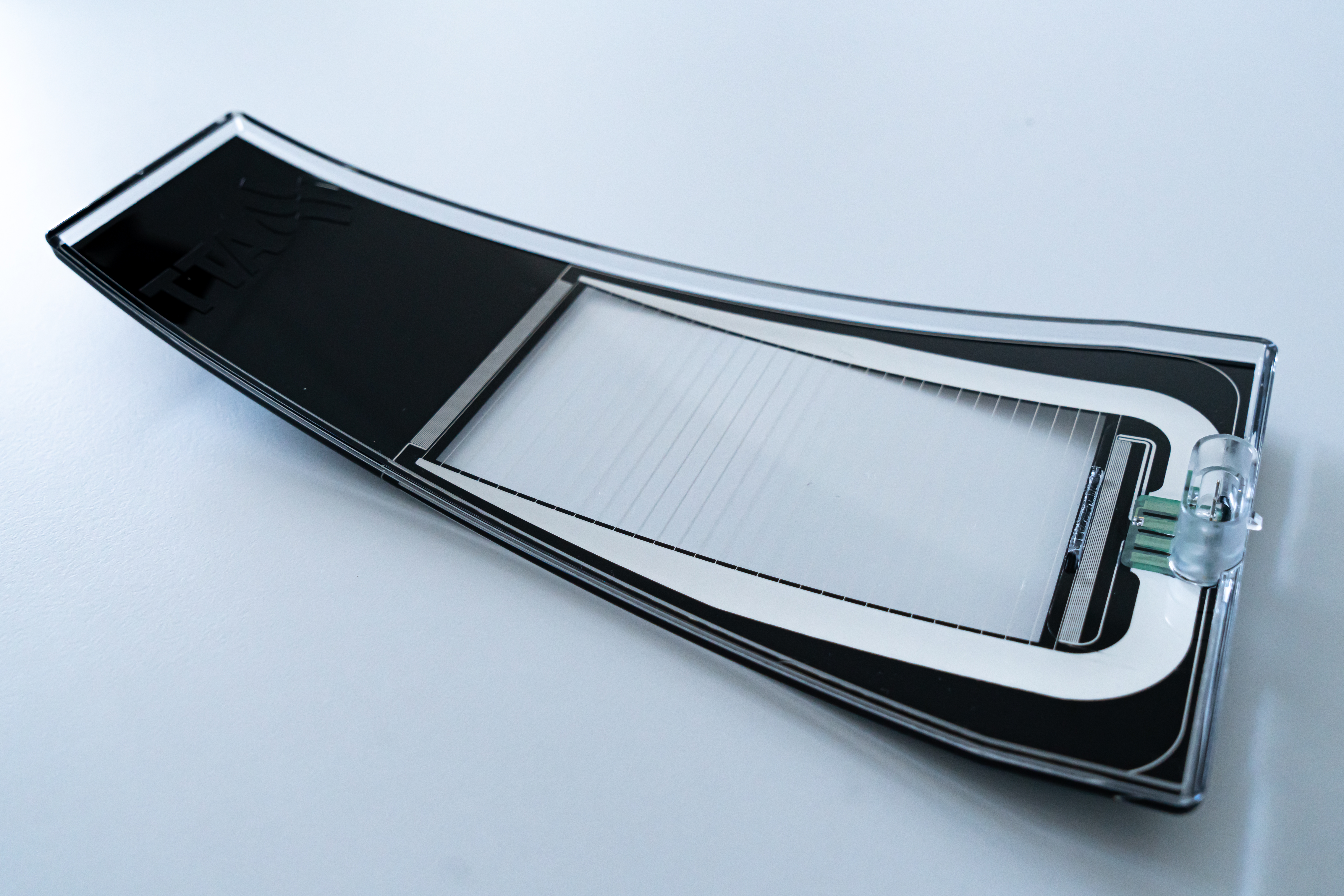
Challenge
ADAS sensors (radar, LiDAR, cameras) must deliver reliable data in all weather conditions. Snow, ice and fogging on sensor covers cause critical system failures — potentially disabling autonomous driving functions at the worst possible moment. Wire-based heating solutions suffer from high scrap rates during manufacturing, inhomogeneous temperature distribution and overheating risks that can damage sensitive sensor optics. With growing EV front-end covers housing multiple sensors in a single module, the heating challenge scales significantly — requiring solutions that are transparent, uniform, and manufacturable at scale.
Our Solution
ATT's transparent heaters integrate seamlessly into sensor covers via back-injection molding — eliminating the need for any additional assembly step. Two variants are available: printed silver heaters for camera and radar covers (a direct, cost-effective replacement for wire-based solutions with dramatically lower scrap rates) and transparent heaters on conductive substrates specifically for LiDAR applications — since metallic structures such as silver traces would interfere with laser transmission. Both variants maintain excellent transparency across their respective relevant wavelengths.
How It Works
Design & Simulation
Custom heater layout designed using ATT's proprietary simulation tools, matched precisely to your sensor cover geometry and thermal requirements.
Printing & Processing
Silver ink screen-printed on transparent polycarbonate foils with controlled layer thickness, ensuring uniform heat distribution. For LiDAR applications, conductive transparent substrates are used.
Integration
Heater foils back-injection molded using your existing cover tooling — no additional assembly steps, no design changes to your production line.
Testing & Qualification
Comprehensive qualification including thermal cycling, humidity testing, and full automotive validation per OEM-specific requirements.
Variant 1 — Printed Silver Heaters
- Direct alternative to wire-based heaters with significantly reduced scrap rate
- Transparent, back-injection moldable onto polycarbonate
- Thermoformable for complex 3D geometries
- Power density selectable
Variant 2 — Transparent Heaters for LiDAR
- Based on conductive transparent substrates — no metallic structures
- Optimized for LiDAR wavelengths (905 nm and 1550 nm) with > 90% transmittance
- Silver heaters cannot be used for LiDAR — only transparent substrates provide the required light transmission
- Back-injection moldable onto polycarbonate
Application Areas
Camera Covers
Front, rear and surround-view cameras for ADAS Level 2–5. Transparent heaters prevent fogging and icing without affecting image quality.
Radar Covers
76–77 GHz radar modules for adaptive cruise control and collision avoidance. Heater design optimized for < −0.5 dB signal attenuation.
LiDAR Windows
905 nm and 1550 nm LiDAR systems for 3D environment mapping. > 90% transmittance maintained across the entire operating spectrum.
Multi-Sensor Clusters
Integrated front-end modules combining camera, radar and LiDAR behind a single heated cover — the growing standard in modern EV platforms.
Technical Data
Key Advantages
- Proven technologies for serial production
- Seamless back-injection molding integration — no assembly step
- Transparent heaters on conductive substrates specifically for LiDAR
- Transparent across visual, radar and LiDAR wavelengths
- Proven supply chain: direct to Tier 1, or combined with injection molding partner to OEM
- Compliant with automotive qualification standards
Frequently Asked Questions
What types of ADAS sensors can be heated with ATT's foil heaters?
How fast can the heater de-ice a sensor cover?
Does the heater affect radar or LiDAR sensor performance?
Can the heater foil be integrated into existing injection molding tools?
What is the difference between silver heaters and transparent heaters?
What automotive qualification standards do ATT heaters meet?
Let's Start Your Project
Ready for the next generation of thermal solutions? Contact our expert team.
Response within 24 hours • Free initial consultation