Printable NTC Sensor
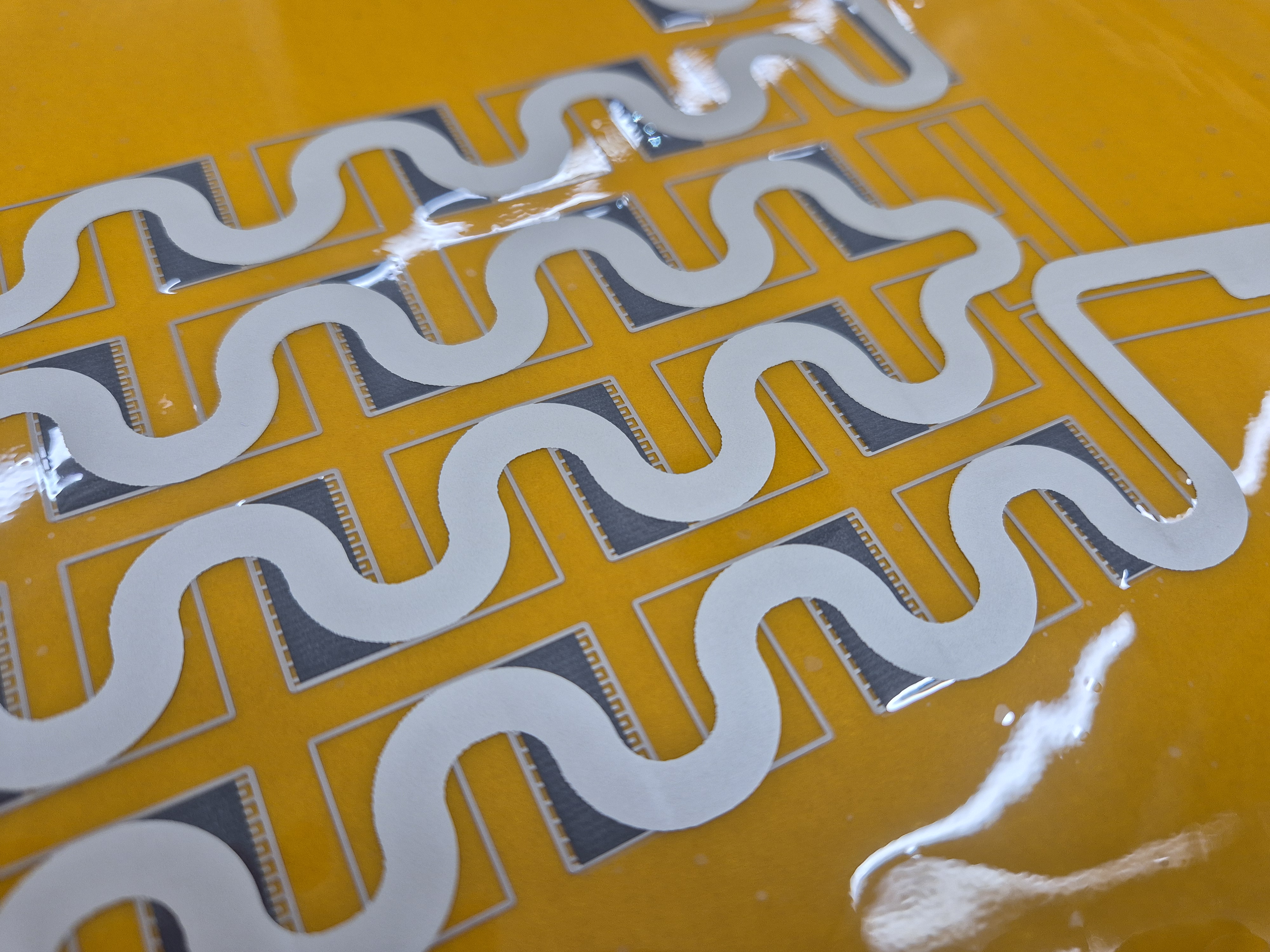
Patent-protected printed NTC sensor — under 25 μm thin, configurable as point, line or area. Cost-effective alternative to SMD NTC sensors.
Challenge
Traditional SMD NTC sensors are point-measurement devices requiring pick-and-place assembly, adding cost and limiting spatial coverage. They have fixed form factors that cannot adapt to curved or flexible surfaces. For applications requiring temperature monitoring over larger areas or integration into thin-film heating systems, conventional approaches add complexity, assembly steps and cost that are disproportionate to the sensing function.
Our Solution
ATT's printable NTC sensor is screen-printed directly onto substrates at under 25 μm thickness — making it effectively invisible on surfaces. Unlike SMD sensors that only measure at a single point, this sensor can be configured as a point sensor, line sensor or area sensor, covering regions and geometries that traditional components cannot address. It integrates seamlessly into ATT's printed heaters, creating a single-foil heating + sensing solution. It is back-injection moldable for integration into plastic parts, eliminating the pick-and-place machine, soldering and associated assembly costs.
How It Works
Sensor Design & Layout
Based on your application requirements, we define the optimal sensor type (point, line or area), geometry and resistance characteristics. Integration into existing heater foils is designed at this stage if applicable.
Printing & Processing
NTC ink is screen-printed onto the target substrate with precisely controlled thickness (< 25 μm). The printing process enables seamless co-production with ATT heater elements on the same foil.
Integration
Sensor foils are delivered for lamination, back-injection molding or direct application. For combined heater + sensor foils, a single integration step covers both heating and temperature sensing functionality.
Testing & Qualification
Each sensor is electrically characterized and verified against specification. For automotive applications, full qualification per customer-specific requirements including thermal cycling and environmental testing.
Application Areas
Heated Interior Surfaces
Integrated directly into printed cabin heaters for armrests, door panels and dashboards. Combines heating and temperature sensing in a single foil — eliminating a separate sensor component.
Battery Temperature Monitoring
Area or line sensors printed onto battery cell surfaces or cooling plates. Provides spatial temperature coverage that point sensors cannot achieve, valuable for both development and series applications.
Industrial Process Control
Temperature monitoring on production equipment, heated tools, and process surfaces. The ultra-thin profile and wide temperature range (−55°C to +200°C) enable integration into heat-sensitive processes.
Flexible & Wearable Applications
The printable, ultra-thin form factor enables integration into flexible foils, textiles and wearable devices — applications where rigid SMD components are impractical or impossible.
Technical Data
Key Advantages
- Ultra-thin (< 25 μm) — effectively invisible on surfaces
- Freely configurable: point, line or area sensor geometry
- Integrable into printed heaters — heating + sensing in one foil
- Back-injection moldable into plastic parts
- Wide temperature range: −55°C to +200°C
- No pick-and-place assembly required — printed directly onto substrate
- Cost-effective for large-area temperature monitoring
- Patent-protected technology
Frequently Asked Questions
How does a printed NTC sensor compare to a traditional SMD NTC?
Can the NTC sensor be combined with ATT heater foils?
What does "area sensor" mean — is this a thermal camera?
Can the sensor be back-injection molded into plastic parts?
What accuracy does the printed NTC sensor achieve?
Is the printed NTC sensor available as a standalone product?
Let's Start Your Project
Ready for the next generation of thermal solutions? Contact our expert team.
Response within 24 hours • Free initial consultation