Aircraft Floor Heating
Self-regulating PTC heating for aircraft doors — ultralight, no controller required, fully aviation approved. Up to 1,350 × 1,000 mm.
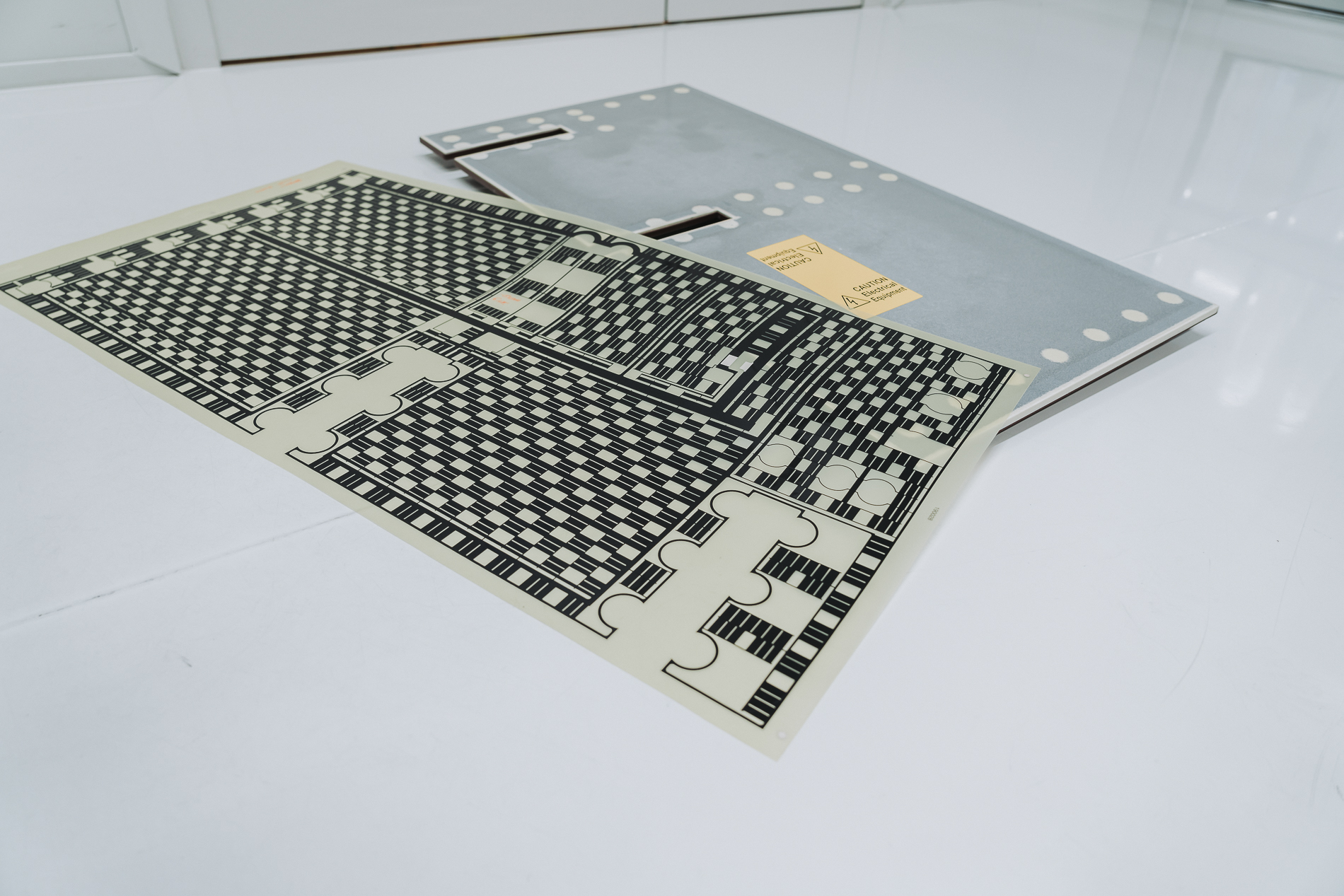
Challenge
In aircraft door areas, the floor cools significantly during long-haul flights due to thermal bridging to the outer skin. This reduces passenger and crew comfort and causes condensation formation — a potential safety and maintenance concern. Previous heating solutions were vulnerable to mechanical stress, complex to integrate, heavy, and lacked the robustness required for aviation production processes. High rejection rates and reduced lifespan made conventional systems economically problematic.
Our Solution
ATT's innovative PTC heater film technology is now available as an intelligent, ultralight and durable component of the composite floor structure. The self-regulating PTC material automatically maintains a homogeneous temperature in the door areas without requiring a control unit — reducing system complexity, weight and maintenance. Using novel high-performance materials such as carbon- and silver-filled polymers, the heater is fully integrated into the composite floor, making it invisible and highly durable against both mechanical and chemical influences.
How It Works
Requirements & Certification Scope
Joint definition of performance requirements, applicable aviation standards and certification scope. We assess door area geometry, thermal bridging characteristics and target temperature profile.
Heater Design & Material Selection
Custom PTC heater layout designed for your aircraft type. PTC material composition selected for the required temperature range. High-performance carbon- and silver-filled polymers ensure fire protection compliance.
Composite Integration
PTC heater films are fully integrated into the composite floor layup during manufacturing. The heater becomes invisible and inseparable — providing superior mechanical and chemical durability compared to surface-mounted solutions.
Testing & Aviation Approval
Comprehensive testing including thermal performance, fire protection, mechanical stress and chemical resistance. Full documentation for aviation authority approval. ATT is your serial supplier for aviation floor heating.
Application Areas
Narrow-Body Door Areas
Entry and service door areas of single-aisle aircraft where thermal bridging to the outer skin is most pronounced. Prevents floor cooling and condensation during all flight phases.
Wide-Body Galleys & Entries
Large door areas and galley floors in wide-body aircraft. Customizable dimensions up to 1,350 × 1,000 mm accommodate the larger floor surfaces typical of wide-body configurations.
Rail Vehicle Floors
The PTC heating technology transfers directly to rail vehicles — entry areas, vestibules and passenger compartment floors benefit from the same ultralight, self-regulating heating concept.
Industrial Floor Heating
Control rooms, cleanrooms and other industrial environments requiring precise, maintenance-free floor heating. The composite-integrated design provides exceptional durability in high-traffic areas.
Technical Data
Key Advantages
- Self-regulating PTC: homogeneous heating without control unit or temperature sensors
- Full integration into composite floor structure — invisible, mechanically and chemically durable
- Ultralight design contributes to fuel efficiency
- Prevents condensation formation in door areas
- Customizable geometry up to 1,350 × 1,000 mm
- Fully tested and approved for aviation
- Technology transferable to rail and industrial floor heating applications
Frequently Asked Questions
Why does the PTC heater film not require a control unit?
How is the heater integrated into the aircraft floor?
What fire protection standards does the PTC heater film meet?
Can the technology be used outside of aviation?
How does floor heating improve passenger comfort in door areas?
What is ATT's supply model for aviation floor heating?
Let's Start Your Project
Ready for the next generation of thermal solutions? Contact our expert team.
Response within 24 hours • Free initial consultation