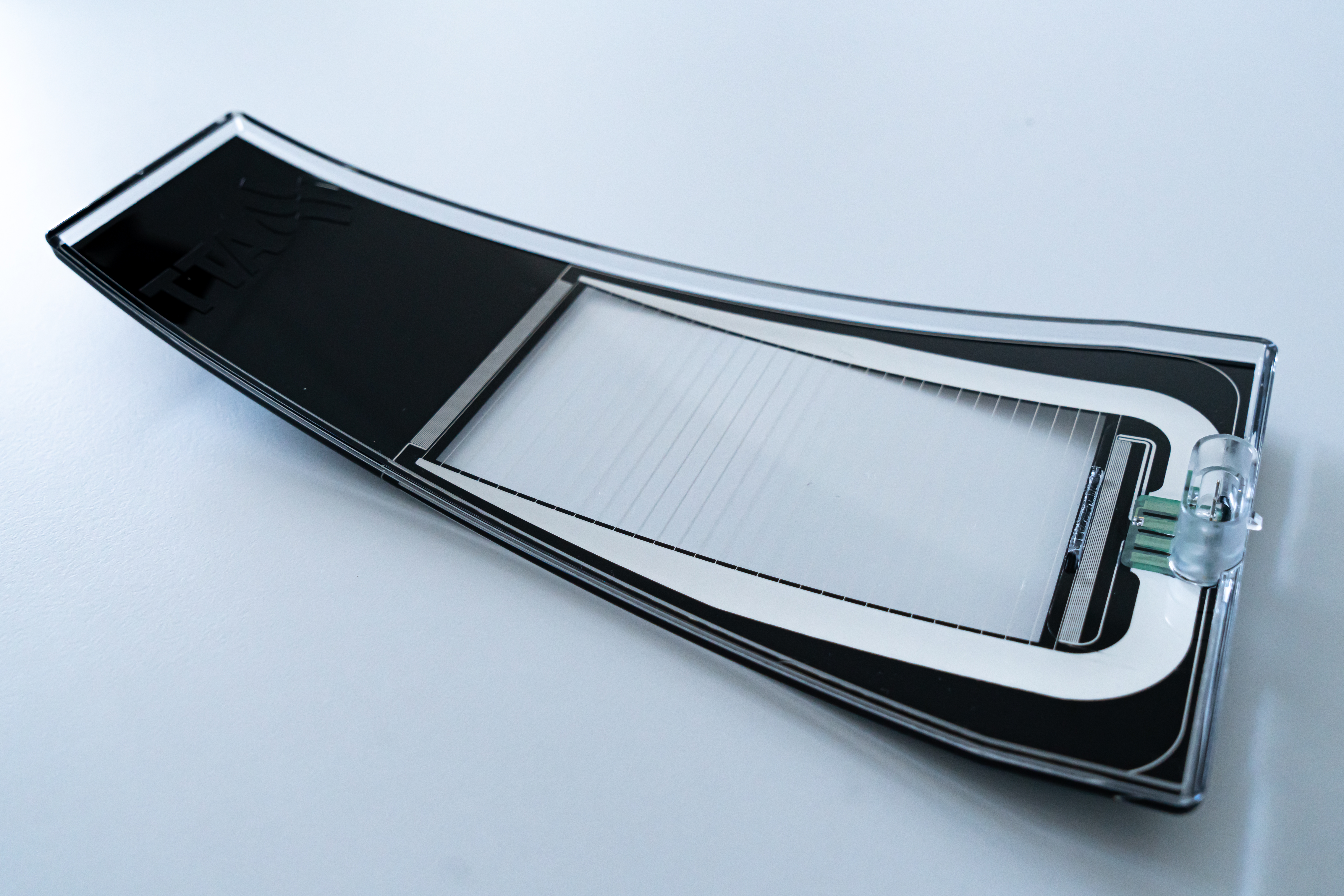
ADAS performance starts at the sensor surface. A camera lens, radar cover or LiDAR window can only support perception if ice, snow, fog and road slush do not block the signal path.
Sensor surface heating is therefore more than a thermal component. It must fit the optical or radar transmission requirements, voltage level, diagnostic concept, cover geometry and production process.
Engineering decisions before a heater layout
Transmission first
The heater must preserve camera image quality, radar attenuation limits or LiDAR transmission before thermal power is optimized.
Diagnostic architecture
Circuit count, failure detection and voltage level can determine which heater concept is realistic.
De-icing profile
Target time, ambient temperature, cover material and airflow define the needed power density.
Process integration
Back-injection molding or functional-film integration can reduce assembly complexity when designed early.
Comparison
| Decision point | Engineering focus | Why it matters |
|---|---|---|
| Camera surfaces | Transparent heating with optical clarity | Fogging and icing on visible or IR camera covers |
| Radar covers | Printed layouts designed around attenuation limits | Metallic structures must be evaluated carefully |
| LiDAR windows | Transparent conductive substrates | Silver traces are usually not suitable in the beam path |
| System level | Thermal, electrical and diagnostic fit | Not just a heater wattage problem |
Common engineering questions
Why do ADAS sensors need heated surfaces?
ADAS sensors need a clear physical signal path. Ice, snow, fogging, condensation or road slush on a camera lens, radar cover or LiDAR window can reduce availability before perception software can interpret the scene.
What is the difference between camera, radar and LiDAR cover heating?
Camera and LiDAR covers usually require optical or infrared transmission, while radar covers must respect attenuation and electromagnetic behavior. The heater layout, materials and position have to be evaluated for the specific sensor type.
Can printed heaters be used on sensor covers?
Printed heater concepts can be used when the conductive layout, substrate and integration process fit the optical, radar, diagnostic and manufacturing constraints of the sensor cover.
What design constraints matter for ADAS sensor heating?
Important constraints include transmission, heating time, ambient conditions, cover material, voltage level, diagnostics, package space, contacts and production process.
How does sensor surface heating differ from general de-icing?
Sensor surface heating is not only about melting ice. It must preserve sensor performance and system diagnostics while fitting a small, exposed and often optically or electromagnetically sensitive surface.
Engineering takeaway
The best solution is application-specific. ATT combines printed heater and sensor know-how with layout, substrate and process evaluation so the functional layer fits the real engineering constraint.