Battery Diagnostic System
Ultra-thin measurement foil with 27 temperature sensors for real-time surface monitoring — 200 μm, ±0.5°C, CAN bus interface, daisy-chainable.
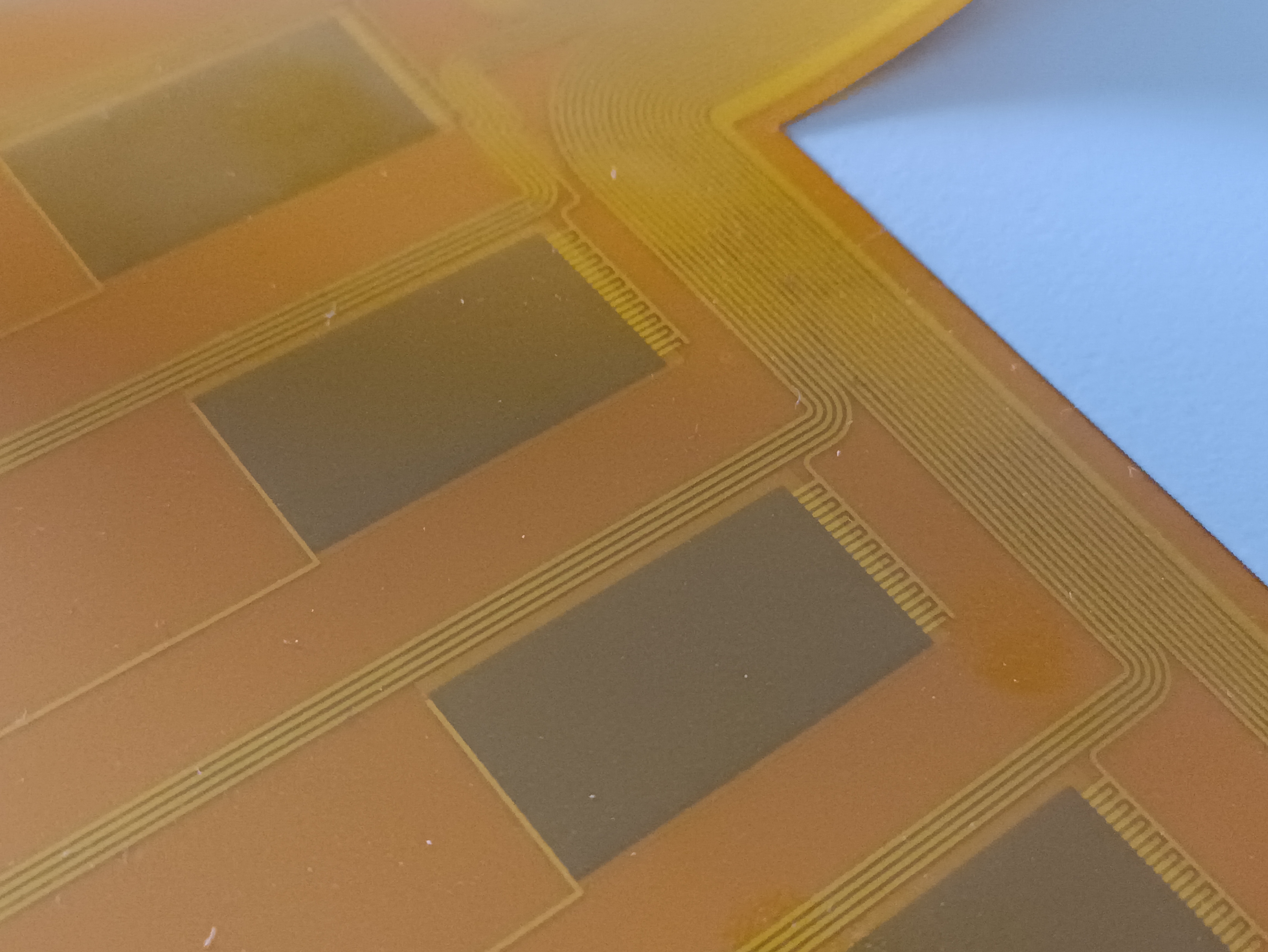
ATT Battery Sensor Demo
Challenge
Traction battery service life depends on operating within the optimal 15°C–35°C range. A single thermal anomaly in one cell can impact the entire module. Conventional temperature probes offer limited spatial resolution and add significant mounting height — critical constraints in tightly packed battery modules where every millimeter counts. During development and validation, engineers need comprehensive thermal mapping capabilities that traditional point sensors simply cannot provide.
Our Solution
ATT's ultra-thin measuring foil (200 μm incl. adhesive) wraps around individual battery cells with up to 27 independent surface temperature sensors. Each sensor's size and contour are freely definable, enabling precise thermal mapping based on the actual investigation need. The system provides real-time data with 0.001°C resolution via CAN bus, and multiple foils can be daisy-chained for full module or pack coverage. The miniature ECU (30 × 28 × 3.5 mm) ensures minimal integration footprint.
How It Works
Sensor Layout Design
Based on your cell geometry, module configuration and measurement objectives, we define the optimal number, size and position of temperature sensors on the foil. Each sensor's contour is freely configurable.
Foil Manufacturing
Measurement foils are manufactured with up to 27 independent NTC sensors per foil at just 200 μm total thickness (including adhesive layer). Grade A NTCs ensure ±0.5°C accuracy across the full range.
Application & Calibration
Foils are applied to cell surfaces using optional double-sided adhesive. The system is calibrated and connected via CAN bus — multiple foils can be daisy-chained for full module coverage.
Data Integration
The adaptable CAN interface allows direct integration into existing BMS architectures or standalone data acquisition systems. Real-time thermal data is available at 0.001°C resolution for your analysis tools.
Application Areas
Cell-Level R&D
Detailed thermal characterization of individual battery cells during charge/discharge cycling. Up to 27 sensors per cell reveal temperature gradients invisible to conventional point probes.
Module Validation
Daisy-chained foils across multiple cells provide full-module thermal mapping during validation testing. Identify thermal hotspots, cooling system imbalances and cell-to-cell variations.
Pack Thermal Mapping
Scale thermal monitoring to the full pack level by combining multiple daisy-chained foils via CAN bus. Validate BTMS performance and thermal uniformity under real-world drive cycles.
Field Testing & Durability
V0 (UL 94) fire rating and robust construction allow deployment in field test vehicles. Monitor battery thermal behaviour under real driving conditions over extended periods.
Technical Data
Key Advantages
- Ultra-thin (200 μm) — fits between tightly packed battery cells
- Up to 27 independent sensors: size and contour freely definable
- Real-time capable with 0.001°C resolution
- Daisy-chainable: multiple foils per module via CAN bus
- Adaptable CAN interface for direct BMS communication
- Optional double-sided adhesive for easy application
- Not limited to EV: valuable wherever space is limited and spatial resolution matters
Frequently Asked Questions
How many temperature sensors can be placed on a single foil?
Can multiple foils be connected to monitor an entire module?
Does the 200 μm foil thickness affect battery cell spacing?
What interface options are available for data acquisition?
Is the diagnostic foil suitable for use in production vehicles?
Can ATT customize foil dimensions and sensor layout?
Let's Start Your Project
Ready for the next generation of thermal solutions? Contact our expert team.
Response within 24 hours • Free initial consultation