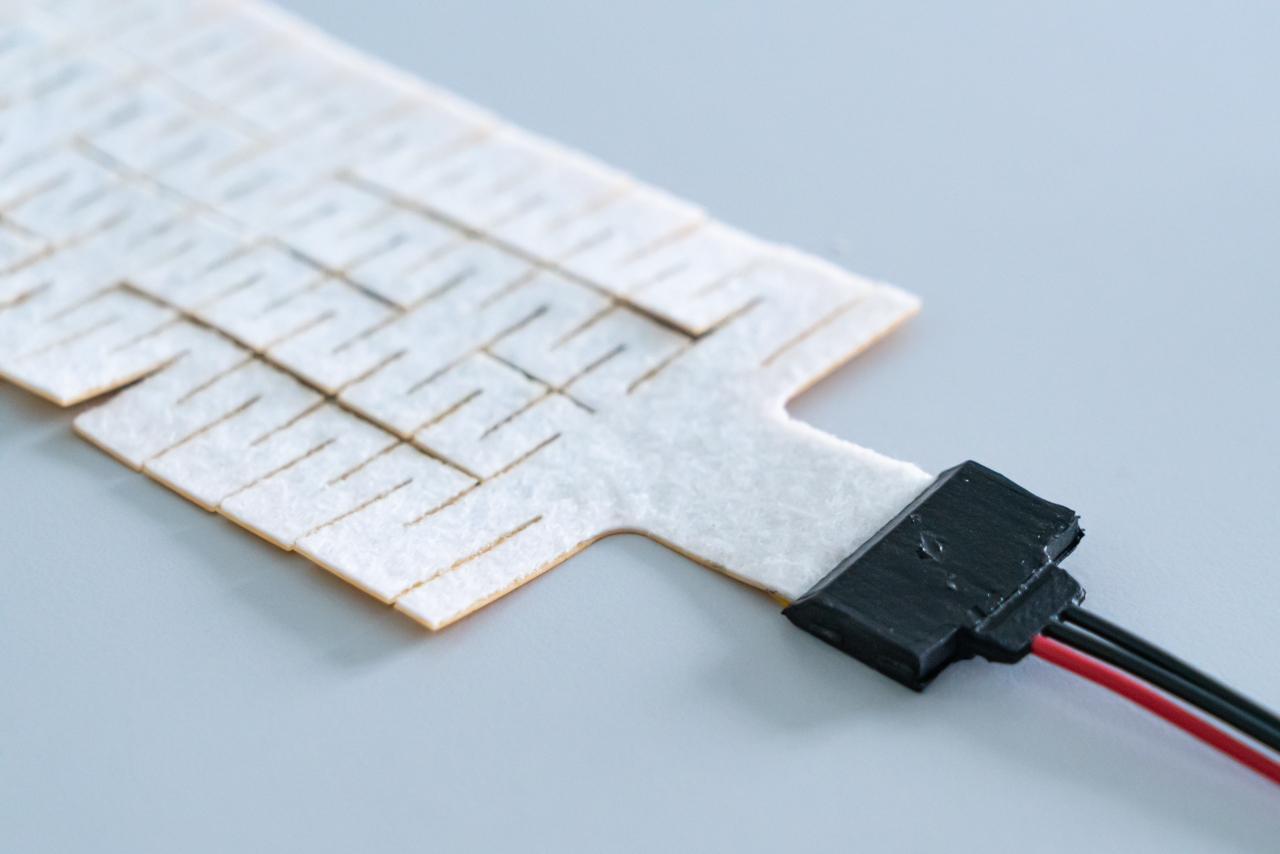
In an electric vehicle, heating the full cabin air volume is not the only path to comfort. Passengers experience contact temperature, radiant exchange, airflow, clothing, glass temperature and warm-up time together.
Localized heating uses selected surfaces such as armrests, door panels, consoles, seats or trim areas to influence perceived comfort where occupants actually feel cold. The engineering question is which surfaces matter, when they should heat and how they interact with HVAC strategy.
Where localized heating changes the design logic
Cold-start comfort
Local surfaces can provide early comfort while the cabin air is still warming.
Contact zones
Armrests, seats and trim can matter disproportionately when occupants touch or sit near them.
Radiant balance
Warm surfaces near occupants can reduce cold sensation without relying only on air temperature.
System integration
Localized heat must be coordinated with HVAC, controls and surface materials.
Comparison
| Decision point | Engineering focus | Why it matters |
|---|---|---|
| Full cabin heating | Warms air volume and all occupants broadly | Can be energy-intensive during cold start |
| Seat/contact heating | Strong local effect at direct contact points | Limited body coverage and surface scope |
| Printed surface heating | Adds warmth to selected trim or panels | Supports comfort perception and design integration |
| Thermal comfort simulation | Compares zones and scenarios before hardware | Reduces trial-and-error in surface selection |
Common engineering questions
Why is EV thermal comfort not only about cabin air temperature?
Occupants experience comfort through air temperature, contact temperature, radiant exchange, airflow, clothing, glass temperature and warm-up time. Cabin air temperature alone does not describe the full comfort perception.
What is localized heating in electric vehicles?
Localized heating warms selected surfaces or zones close to occupants, such as seats, armrests, consoles, door panels, trim surfaces or floor areas, instead of treating the whole cabin as one uniform air volume.
How can heated surfaces improve perceived comfort?
Warm contact or radiant surfaces can reduce cold sensation before the entire cabin reaches a uniform target temperature, especially during cold start.
What is the difference between radiant/contact heating and full cabin heating?
Full cabin heating primarily warms air volume. Radiant or contact heating affects the occupant more directly through surfaces that are touched or close to the body.
When does localized heating make sense?
Localized heating makes sense when comfort can be improved by targeted surfaces, when warm-up time matters, or when HVAC strategy and surface heating can be coordinated at system level.
Engineering takeaway
Localized heating is not a replacement for HVAC in every case. It is a design lever that can improve perceived comfort, warm-up behavior and surface integration when evaluated at system level.