Vehicle Cabin Heating
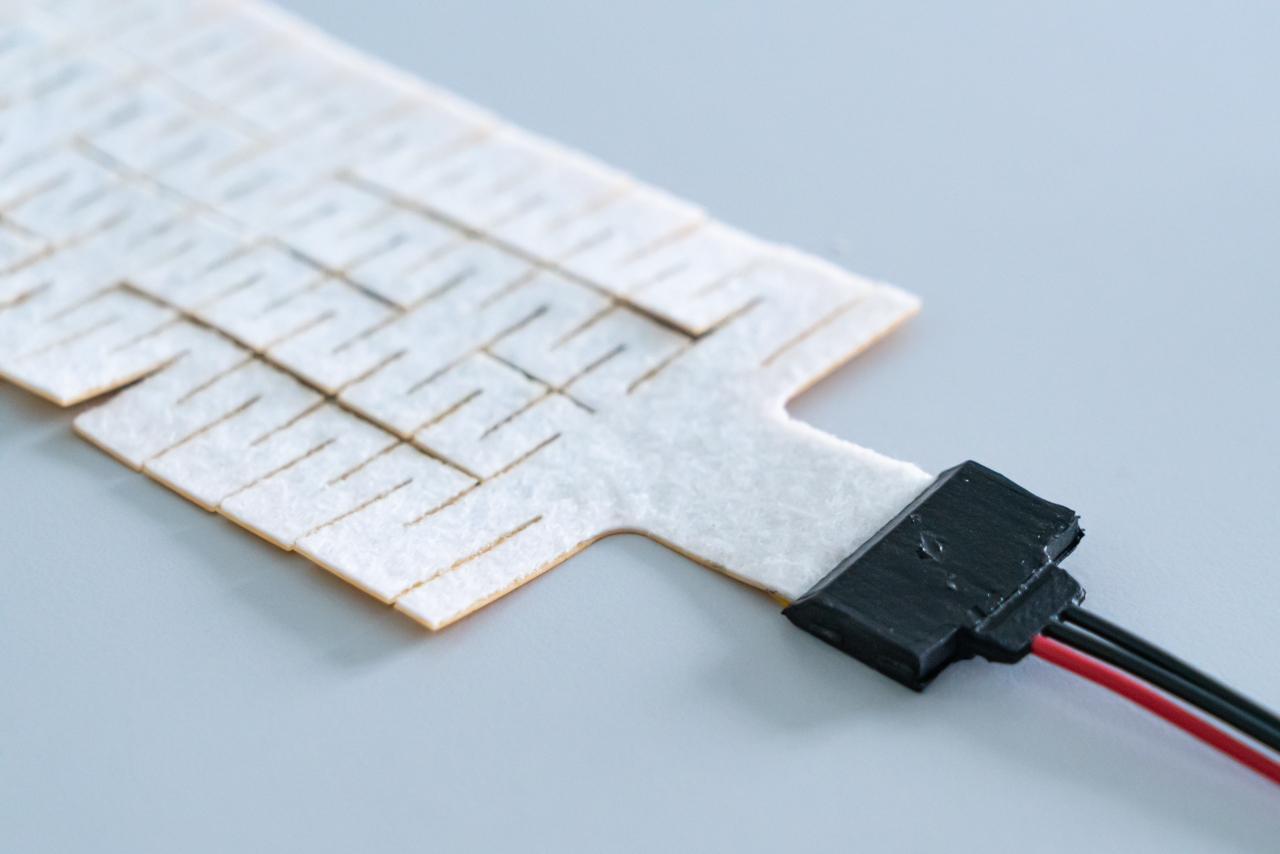
Printed surface heating foils for EV interiors, designed to place heat where passengers feel the difference.
Challenge
Electric vehicles produce no waste heat from the drivetrain. Conventional cabin heating via warm air is energy-intensive, slow during cold start and often constrained by defogging requirements that limit recirculation. At the same time, passengers do not experience comfort through air temperature alone: cold glass, trim surfaces, clothing, contact zones and radiant heat all influence the human thermal balance. Every watt consumed for cabin heating directly affects vehicle energy demand and range.
Our Solution
ATT combines printed interior surface heaters with Thermal Comfort Engineering: before defining heater power or placement, we evaluate which surfaces are most likely to create perceived passenger comfort in the target cabin scenario. Printed heaters integrate directly into soft surfaces such as leather, fabric or foam, or into hard plastic parts by back-injection molding. As area heaters rather than line heaters, they can warm larger surface fractions at lower core temperatures — while simulation helps determine the right heat, at the right surface, at the right time.
How It Works
Thermal Comfort Engineering
We evaluate the cabin scenario, passenger comfort target and relevant heat-transfer mechanisms — convection, contact heat and radiation — to identify where surface heating can create the strongest perceived comfort effect.
Heater Design & Printing
Silver or carbon PTC heater patterns are screen-printed on flexible substrates, precisely matched to your component shape. Power distribution is optimized for uniform surface temperature.
Component Integration
Soft surfaces: heater laminated onto fabric, leather or foam. Hard surfaces: heater foil inserted into injection mold and back-injected — connector created simultaneously via a process developed and patented by ATT.
Qualification & Series
Full automotive qualification including thermal cycling, humidity and mechanical stress tests. Series production with consistent quality from our in-house manufacturing facility.
Soft Surface Integration
- Printed silver or PTC heaters laminated onto fabric, leather or foam
- Area heaters (not line heaters) — large heated fraction, lower core temperature needed
- Cost advantage: larger printed heaters significantly cheaper than wire equivalents
- PTC variant: cannot exceed predefined max temperature, even with strong insulation
Hard Surface Integration
- Heater printed on polycarbonate foil, inserted into tooling, back-injection molded
- Becomes inseparable part of the plastic component
- ATT patent: electrical connector produced simultaneously during molding
- Applicable to dashboard, glove box, door trim, sun visor, pillars
Application Areas
Armrests & Centre Console
Soft-integrated heaters in leather or fabric armrests provide direct radiant warmth to the driver's and passenger's forearms — the body region most sensitive to cold perception.
Door Panels & Trim
Heated door panels and side trim eliminate the cold-wall effect in winter. Using back-injection molding, heaters become an invisible, inseparable part of the plastic component.
Dashboard & Glove Box
Instrument panel and glove box surfaces heated via back-injection molded foils. The large surface area enables effective radiant heating at low power density — maximizing range efficiency.
A / B / C-Pillars
Pillar heaters close the last thermal gaps in the cabin envelope. Combined with door, dashboard and seat heating, they enable a fully radiant cabin heating concept without reliance on air heating.
Technical Data
Key Advantages
- Radiant heat: instant comfort, no warm-up time, no buoyancy loss
- Significant range advantage for EVs vs. conventional air heating
- Thermal Comfort Engineering: predict where heat will actually be felt before hardware is built
- One-stop-shop: comfort simulation, heater design, prototyping and manufacturing
- Not limited to automotive — proven in rail and aerospace applications
- 15+ years of passenger thermal comfort engineering experience
Frequently Asked Questions
How does back-injection integration work and why is it important?
Why does ATT use Thermal Comfort Engineering for cabin heating?
What is the difference between Silver and PTC heater variants?
Can ATT heaters be integrated into existing interior components?
Are ATT cabin heaters limited to automotive applications?
Is radiant surface heating always the best solution?
How does ATT ensure consistent quality in series production?
Let's Start Your Project
Ready for the next generation of thermal solutions? Contact our expert team.
Response within 24 hours • Free initial consultation